
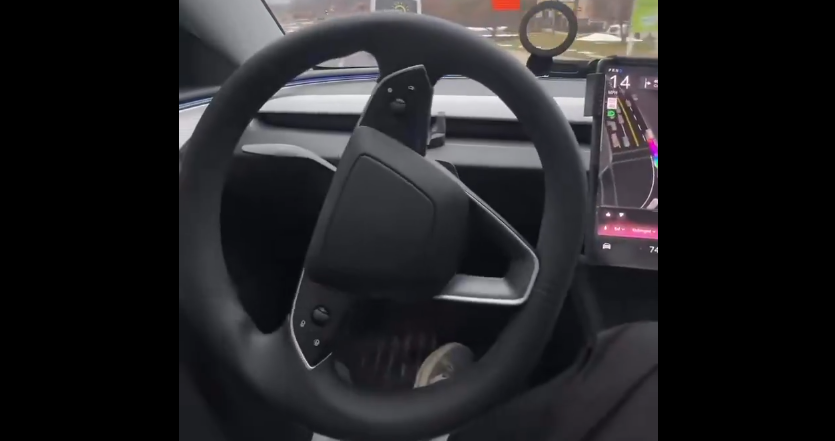

“Incredible things happening with Grok voice mode in Teslas, I love when it starts mocking him at the end 😂” wrote @venturetwins on X, referring to a clip of Tesla’s new AI assistant interacting with a passenger. In their words, people are not just noticing the technology; they are reacting to the personality of the interaction.
This voice mode, part of Tesla’s integration of the Grok AI chatbot into its vehicles, has become a catalyst for broader discussion about how we want machines to behave with us. Grok’s arrival follows Tesla’s 2025.26 software update that added an AI assistant designed to chat with drivers in natural language and with selectable personalities.
Technology like this is not just a convenience feature. It taps into deeper human needs for connection, meaning, and even entertainment during long or lonely drives. Many early testers don’t just want accurate weather or traffic updates. They want a sense that the machine “gets” them, and they are responding accordingly on social media.
People Reclaiming Time Behind the Wheel
“When cars can drive themselves, you have to give the humans something to do,” wrote @venturetwins again in a follow-up X post. “Self-driving cars are an incredible time unlock – you can now DO things during all the hours you used to spend driving. For me, it’s usually email, but fighting with an AI companion works too!” This comment reflects a common emotional truth that is emerging as autonomous features become more prominent: driving once consumed mental space that people now long to fill in meaningful or playful ways.
Experts studying autonomous vehicles have pointed out that emotional responses are fundamental to how people accept and use this technology. Researchers at Washington State University found that feelings of excitement, enjoyment, and novelty all influence attitudes toward autonomous vehicles, especially when users have the chance to interact with them directly. According to a new study on driver perceptions, individuals want to experience the technology before they trust or adopt it.
What @venturetwins expresses is a facet of this trend. Their humorous comment about “fighting with an AI companion” isn’t merely a joke. It signals how drivers may integrate AI into the emotional rhythm of daily life. We are not just interacting with machines. We are creating shared moments of humour, frustration, and connection.
A Mashup of Nostalgia, Wisdom, and Safety
Amid the humorous takes, voices like @alphaman_111’s bring a grounded perspective. In a rich, heartfelt post about driving, they wrote:
“The road does not reward ‘fast drivers’
It rewards disciplined drivers.
A good driver is not the one who passes everyone.
… Because on the road your biggest flex is coming back home.🎯”
This post resonates because it taps into an enduring human concern: the importance of safety, patience, and the emotional relief of arriving home. While Grok and AI make driving more novel or entertaining, seasoned drivers remind us that safe and mindful travel is deeply personal and shaped by lived experience. This comment bridges the new and the familiar. For many, the physical act of driving once carried a mix of independence and responsibility. Even as cars become more autonomous, that emotional terrain stays relevant.
Indeed, research shows that trust in autonomous vehicles is not solely based on how well they operate technically, but also on how secure and understood people feel when they are inside them. A separate machine learning study on trust and young adult attitudes toward autonomous driving found that perceived risk and benefit weigh heavily on whether people embrace these technologies.
The Hype Around AI Personality and the Future of Companionship
Some comments focus less on driving skill and more on companionship. @Dan_Brisbois captured this sentiment vividly: “Bro, that clip is peak future chaos, your damn car roasting you like a savage co-host… Grok straight up turning the Tesla into a rolling comedy club… if your vehicle ain’t clowning you a little in 2026 you’re basically driving a toaster with wheels.” In humorous exaggeration, this user articulates a budding cultural shift. People do not simply want silent automation; they expect witty, dynamic interaction. They want personality.
This aligns with how Grok is designed. According to Tesla’s official support materials, Grok voice mode can adopt different personalities and respond in natural language based on the tone and context of a user’s request. For many early users, that ability to banter or joke introduces a human-like quality that transforms the car from a tool into a conversational partner.
There are broader social undercurrents here, too. Some experts in human-computer interaction note that as AI becomes more conversational and emotionally expressive, people may form attachments or ascribe character traits to machines in ways that resemble human relationships. That can offer psychological comfort, especially during long drives or quiet moments alone.
Human Needs Aren’t Going Away
A contrasting, contemplative voice comes from @Bensam123TV, who wrote: “Companions are going to be everywhere. They immediately get stigmatised as anime waifus for lonely guys, but people need constant socialisation to actually be productive members of society. Look what COVID did. AI needs us as much as we need AI; people just do not know it yet.” This comment points to something deeper than jokes or novelty. It recognises that human beings have social needs that even advanced tech cannot fully replace.
Psychologists have long understood that social interaction is crucial for mental health and well-being. The COVID-19 pandemic highlighted the importance of connection and the risks of isolation. People turned to screens, chats, and digital spaces not just for information but for emotional sustenance.
That need isn’t erased when we sit in a self-driving car. It morphs into new forms. If drivers feel lonely or bored, an AI that can converse, laugh, or even gently tease them may become more than a gadget. It may become a social partner of convenience.
Scepticism and Reality Checks
Not all reactions to Grok’s Tesla voice mode are glowing. @ccompton917 wrote a cautious, technical comment: “You have been able to set Grok’s personality modes for multiple versions now. I don’t see how this is special… unless I am missing something?” Some long-time Tesla users and enthusiasts are less impressed or uncertain about how novel the feature really is.
This scepticism reflects broader debates around automotive AI. Experts caution that entertainment or conversational AI should not distract drivers or create unrealistic expectations of autonomy. Previous coverage has warned that overly conversational systems could lead to distraction if they require too much cognitive engagement from a driver. That concern underscores the importance of balancing innovation with caution on the road.
Conclusion: Progress With Care
Tesla’s integration of Grok into its cars is more than a technological milestone. It exemplifies how technology is entering the space where human emotion, expectation, and daily routine intersect with artificial intelligence. The range of social media responses—from humour and optimism to reflection and scepticism—reveals that people are still figuring out how they want to live with these systems.
Experts agree that as vehicles become more autonomous and conversational, designers and engineers should prioritise safety, trust, and real-world usability alongside novelty. Asking AI to be witty or companionable should not distract from driving tasks or compromise road safety.
For drivers curious about what this means in practice, the practical advice from experts is clear. Treat in-car AI as a tool for information and context, not a replacement for focused driving attention. Explore its conversational features responsibly, and stay informed about updates from Tesla and independent safety researchers.
If you are testing these systems in your own vehicle, remember this: enjoy the innovation, but keep your hands ready and your focus sharp. Your journey should be safe and engaging, not just entertaining.