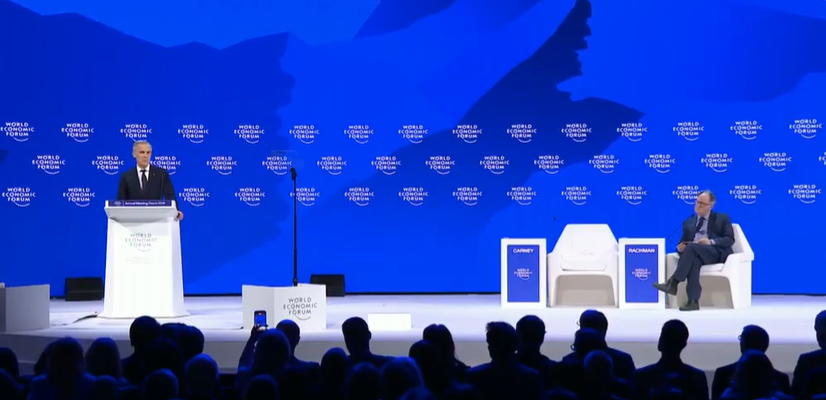

When Mark Carney took the podium at the World Economic Forum in Davos, he did something few leaders do in that room. He named a reality many delegates feel but rarely say out loud. He argued that the old rules that underpinned decades of trade and security are breaking, and that middle-sized countries like Canada must stop pretending the old bargain still protects them. According to the World Economic Forum, Carney said the era of predictable, rules-based order is in a state of rupture and urged middle powers to work together to protect shared values and economic resilience.
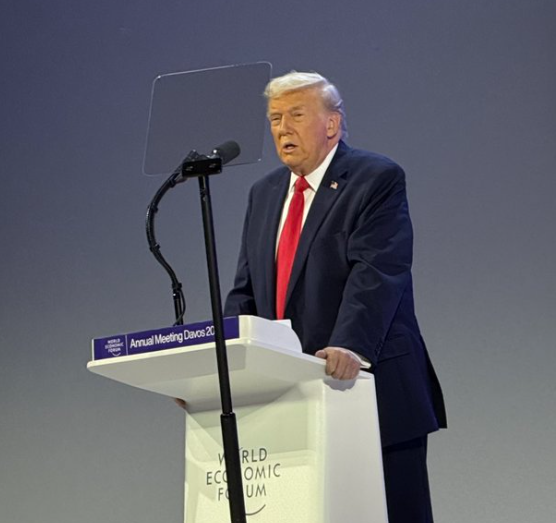
The speech landed hard. U.S. President Donald Trump responded publicly, scolding Canada and saying, in effect, that the United States is the engine behind Canada’s prosperity. According to Reuters, Trump told Davos audiences that Canada “lives because of the United States” after Carney’s remarks. That public sparring turned a sober policy argument into a flashpoint that many Canadians felt in a personal way.
Voices from X and what they mean
“I listened to every word > Mark Carney just went to Davos and effectively insulted our biggest trade partner. We rely on the USA for nearly 75% of our trade, that is our every day buying and selling, rolling on trucks and trains across the border every single day. Alienating our neighbors to chase a fantasy coalition of ‘middle powers’ isn’t strategy; it’s economic suicide. Does he expect us to stop trucking goods to Michigan, Montana and Minneapolis… and start shipping them across oceans to Malaysia? You cannot replace a 24-hour rail connection with a 6-week shipping route without destroying your margins. You don’t build a future by bankrupting your country! Carney is hindering our most vital, profitable relationship for a ‘seat at the table’ that pays zero dividends to the average Canadian.” — X, @jackzenert
This comment reads like the voice of someone whose life and livelihood are tied to the border economy. The anger is practical. It is not just political theatre. It is the fear of delayed shipments, higher costs, and squeezed margins that follow disruption to integrated supply chains. Those feelings matter because policy decisions ripple down into truck cabs, factory floors, and grocery shelves.
Experts agree the worry is realistic. According to Statistics Canada, the United States was the sole export market for nearly two-thirds of Canadian exporting companies, a historic high and a concrete sign of deep integration. Expanding or diversifying global ties is possible, but experts stress it is a long, costly process requiring targeted investments in logistics, ports and trade policy.
“I don’t think it is a great speech. He confessed to play the game without any moral problems till Canada was the one who would go to sacrifice. This kind of situation is happening a long time to the rest of the non developed countries. Read the South American history.” — X, @adri_fr
This writer expresses a weary pattern recognition. They read Carney’s argument through a historical frame of unequal bargains between large and smaller economies. That emotional response is rooted in real experiences across decades where weaker economies have been asked to absorb costs of geopolitical shifts or market pressures while richer partners reaped benefits. It is also a call for moral reflection: who pays when geopolitical strategies change.
Roland Paris, Professor of International Affairs at the University of Ottawa, frames this as a familiar dilemma for middle powers. He notes that middle powers have often participated in rituals of cooperation that protected them, even when the protection was imperfect. Naming the limits of that bargain can be honest, but it also raises questions about who bears the adjustment costs and how to share them fairly.
“This is the speech that will forever brand this globalist WEF Manchurian candidate as the politician to create more damage to our economy than any previous PM in Canada’s history. He does not speak for the majority of Canadians as it is now apparent he has chosen communist China over our friends to the south.” — X, @PeterRMacIsaac
That language is raw and strongly political. It shows how social media compresses complex anxieties into sharp accusations. The underlying feelings are fear of betrayal and loss. For many Canadians, trade with the United States is not an abstract policy; it is identity and daily routine. When a leader speaks of diversification or pushing back against a dominant partner, some citizens hear threat and betrayal.
Careful analysis shows diversification will be neither instant nor cost-free. According to USTR data and bilateral trade statistics, two-way goods trade between Canada and the United States remains measured in hundreds of billions of US dollars, and transport links and integrated supply chains are deep and structural. Policymakers who call for strategic autonomy must pair such declarations with realistic transition plans and support for affected communities, or public anxiety will harden into political backlash.
“Carney, Canada, is the new leader of the free world. Macron, Mertz, are strong great leaders, but Canada has the vocalisation and projection to lead among leaders. We should all get behind Canada and this message from Carney.” — X, @eightonefivetwo
This comment captures pride. For many observers around the world, Carney’s frankness felt relieving. There is an emotional comfort in seeing a small or mid-sized country speak plainly about limits and values. That pride is political, but it also reflects a deeper human hunger for leadership that names danger without sugar coating it.
International reaction underlined that relief. Several allied leaders and officials praised the speech as necessary and clear. According to The Guardian, Australia’s finance officials and some European figures described the address as striking and widely discussed in government circles.
“That’s what African, Asian & South American leaders & politicians have been already saying for decades. It’s nothing new at all. I’m glad the masks are off though. I hope the usury based global financial cabal will lose before they move their wealth into another system / host.” — X, @Dr__Manhattan_
This voice points to a long-held global critique. People in regions beyond the transatlantic core have long argued that the rules-based order was uneven in its protections. That memory produces scepticism when a Western leader highlights the same faults. The emotion here is both vindication and impatience. It is a reminder that the global conversation Carney stepped into is not new for everyone.
Experts and the balance of risk and time
Carney’s thrust is twofold. He argues the era of guaranteed rules and guardianship is receding, and he asks middle powers to create new, issue-by-issue coalitions to protect values and supply lines. The argument is strategic, not isolationist, but it requires a heavy lift.
Trade lawyers and market experts caution that diversification is technically feasible but costly. William Pellerin, partner and co-head of the international trade group at McMillan LLP, emphasises that shifting trade patterns at scale requires time and meticulous legal and financial work. He says sudden swings can expose businesses to new risks and that Canada should be cautious in rebalancing ties even as it seeks new partners. According to McMillan LLP, Pellerin has repeatedly warned that integration with new markets carries follow-on legal and logistical challenges that require planning and transitional support.
Data make both that caution and Carney’s warning sensible. According to Statistics Canada, a very large share of Canadian exporters relies exclusively on the United States market, which means the short-term costs of geopolitical friction would be real for a large pool of firms. That structural dependence helps explain the fierce online reaction from people who work in cross-border logistics, manufacturing and services.
At the same time, analysts of foreign policy argue that maintaining unconditional alignment with a single dominant partner brings its own risks if that partner uses trade and finance as instruments of coercion. Roland Paris and other scholars point out that middle powers face a choice: accept vulnerability or invest in resilience and new coalitions. That is Carney’s point in blunt form. The political challenge lies in translating strategy into programs that cushion workers, support supply chain adaptation, and reward firms that invest in diversification.
What ordinary people and communities need now
The debate on X shows how policy language becomes caught in raw, human feelings. People are angry, afraid, proud and sceptical at once. Those reactions are the real politics of any big strategic shift. If Canada is going to pursue greater strategic autonomy in trade, finance and critical supplies, it will need three practical things, grounded in evidence and expert advice.
First, transitional supports. The government should pair any diversification plan with targeted help for exporters, small manufacturers and logistics firms. This means export finance, port upgrades, and workforce retraining programs that reduce the cost of changing markets. Experts in trade law and public policy stress that legal and regulatory work must be done in parallel so companies can adapt without breaking. According to McMillan LLP, trade counsel and export support will be essential to manage disputes and to open new markets responsibly.
Second, clear risk communication. People whose lives depend on cross-border flows need straight talk about timelines and likely disruptions. Statistics show the scale of integration is large, so governments must avoid empty slogans and instead provide phased, measurable steps, buffer funding, and local outreach to communities on both sides of the border. The report by Statistics Canada suggests that the depth of U.S. market reliance is a structural fact that will not change overnight.
Third, coalition building with like-minded partners on concrete issues. Carney is right that middle powers gain leverage when they act together on targeted problems. That means creating practical frameworks for cooperation on critical minerals, supply chain security, and climate-resilient infrastructure. Those are areas where pooled investment and shared standards can produce alternatives to bilateral dependence while protecting jobs and services at home. The World Economic Forum transcript of Carney’s speech makes that exact case: building coalitions for issues where values align and where practical payoff can be realised.
Conclusion: realistic hope, practical steps
Carney’s Davos speech jolted a debate that is already living in the lives of many Canadians. Online comments show how strategy is felt in the gut of ordinary life. Those reactions are real and must be answered with more than rhetoric.
Policy can be both aspirational and concretely caring. Governments can pursue strategic diversification while offering explicit support to workers, exporters and border communities. They can also build the international partnerships Carney describes in ways that deliver near-term payoffs, not only long-term vision. As a practical starter package, policymakers should publish a phased diversification plan that includes export finance targets, port and rail investments, retraining funds, and a measurable timeline with annual progress reports. Experts in trade law and international affairs should be tasked publicly with a two-year road map of legal, regulatory and investment steps needed to reduce the most acute vulnerabilities.
If the old order is indeed fraying, the human test will be how well leaders turn high-level strategy into concrete programs that ease the human cost of change. That is what citizens in border towns, truck cabs, factory floors and export offices are asking for when they type in anger and in hope. Real leadership listens to those voices and builds plans that protect livelihoods while steering the country toward a more resilient future.
Learn More: Countries and the Problems — What People on X Are Saying