
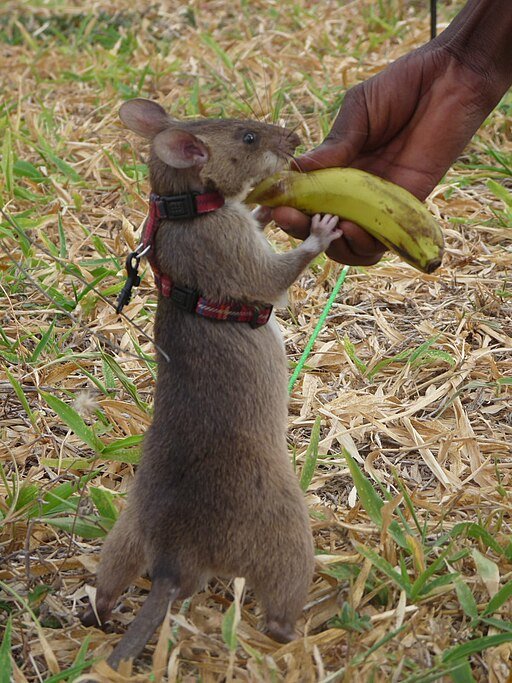

“Meet the HeroRATs
Trained African giant pouched rats can detect tuberculosis in just 3 seconds using their powerful sense of smell, helping find cases early and save lives.” — X / @sciencegirl
That short post captures a mix of wonder and practical hope. It points to a surprising reality: in parts of East Africa, specially trained giant pouched rats are now part of the public health toolkit that finds people with tuberculosis who were missed by routine clinic tests. The rats work in a laboratory setting where trained animals sniff rows of sputum samples and pause over positives, a signal that technicians then confirm with microscopy or molecular tests. Observers say a rat typically pauses for about three seconds when it detects a TB-positive sample.
Voices from X and what they mean
These HeroRATs are absolute legends 🐀💪 Sniffing out TB in just 3 seconds and saving countless lives faster & cheaper than high-tech machines? Mind-blowing innovation straight from nature! 🌍❤️
X / @unionjackspirit
Who knew giant pouched rats could outsmart labs and help millions in Africa get treated early? 🩺✨
This is the kind of smart, no-nonsense solution the world needs more of- practical, effective, and life-changing.
Britain could learn a thing or two from this kind of creative thinking to restore real progress 🇬🇧
Tag a friend who needs to see these furry heroes in action! 👇
Drop a 🐀 if you’re amazed too!
That reaction is admiration mixed with relief. It reflects a broader public appetite for low-cost, pragmatic solutions when machines and budgets fall short. Experts say the rats do not replace standard diagnostics but add meaningful detection power by re-screening samples that test negative in clinics. A peer-reviewed study published on PLOS One in 2025 found that rat-based re-screening added about 48 per cent more confirmed TB cases beyond what clinics found on their own. That is the evidence behind the enthusiasm.
This is not a flex 😭😭
X / @Ola_adenugga
With all the money from USAID, WHO and UN? Our most advanced tech isa rat? Mama Afrika 😂😂
This comment mixes humour, pride, and frustration. It is understandable when people see years of international funding and still notice simple, local ingenuity stepping in. Global financing for TB remains far below targets, and experts warn that funding shortfalls limit access to diagnostics and care in the places that need them most. Saying the “most advanced tech is a rat” calls attention to the mismatch between money, priorities, and local innovation. According to the World Health Organisation (WHO), public health specialists argue the right response is not mockery but redirecting funds so proven, affordable tools and local programs can scale faster.
They use these rats in Cambodia to find landmines. They can smell the explosive, and they are too light to trigger a detonation.
X / @MathAmigo
That comment names a real second life for the animals. APOPO began training these pouched rats for landmine detection and later adapted the same scent training for disease detection. The landmine work shows the animals’ scent skills and safety in field tasks, which helped build trust for their health work. APOPO’s long record with mine clearance and TB screening helps explain why communities and funders kept investing in the idea.
Inasmuch as this looks innovative, handling potential TB samples without proper PPE is dangerous and can lead to a serious health emergency.
X / @EmmaEzeOkoro
That concern is valid. Handling sputum and diagnostic material requires standard biosafety measures. APOPO’s protocol is to re-run samples in a laboratory setting and confirm rat indications with concentrated smear microscopy or molecular tests, following lab procedures for safe handling. International guidance for TB laboratories stresses personal protective equipment, ventilation, and standard precautions when processing sputum. Those safeguards matter for staff safety and for trust in the method.
They’re also used to detect land mines in Africa, great little rodents. Not up close, though, got pretty close to them while staying in a rainforest in Kenya.
X / @Cortexmat
This echoes what trainers and community volunteers report: the rats are socialised, hand-trained, and handled by technicians. Public contact with the animals is controlled. Trainers spend long months preparing the rats, building trust, and ensuring the animals are comfortable in lab routines. That human-animal bond is essential to both animal welfare and consistent performance.
What experts and research say
“We detected more than 2,000 cases in our Dar es Salaam lab last year that had been missed by clinic testing. One untreated person can infect 10 to 15 people. These were not just samples; these were lives saved.” Joseph Soka, manager of the APOPO laboratory in Dar es Salaam, describes how re-screening finds people who would otherwise remain infectious, as reported by The Guardian. This reporting from field staff is backed by new peer-reviewed evidence. The PLOS One study, published in 2025 and led by Tefera B. Agizew and colleagues, analysed over 43,000 sputum samples from 69 health facilities in Tanzania and found that the rats added a 48 per cent incremental yield of confirmed TB cases beyond clinic diagnostics. The paper provides detailed sensitivity and specificity figures and shows that the rats detect many cases with low bacterial loads that other tests sometimes miss.
A systematic review and operational reports also document that APOPO’s rat program has screened hundreds of thousands of samples and identified tens of thousands of additional cases over the last decade. According to a 2023 study, researchers caution that rat-based screening is currently used as a second-line screening tool, not as a stand-alone diagnostic, and they call for further studies comparing rats with advanced molecular tests such as Xpert Ultra. That cautious framing is standard in diagnostics research: an innovative screening approach can be extremely useful when integrated into quality-assured laboratory systems.
On safety, international TB laboratory guidance requires standard precautions and appropriate PPE when handling sputum. APOPO’s model sends clinic-negative samples to a laboratory where trained staff re-evaluate material under controlled conditions and confirm positives with microscopy or molecular testing. This layered approach reduces risk while preserving speed and cost efficiency.
Conclusion: practical, evidence-based next steps
If you are a health program manager, consider integrating rat-based re-screening where smears or limited molecular testing miss patients and where APOPO or similarly accredited partners can provide lab-quality and confirmation. The 2025 PLOS One evidence shows substantial added case finding in program settings. When you do this, ensure laboratory biosafety procedures are in place and that any rat-positive result is confirmed by standard clinical tests before treatment starts.
If you are a community member or volunteer, keep doing outreach that links symptomatic people to clinics. Real patients quoted in reporting say they only got treatment after re-testing identified TB. Personal outreach still closes the loop between detection and care.
If you are a donor or policymaker, the humane lesson here is clear. Support for scalable, locally owned solutions helps uncover missed cases and reduce transmission. According to the Global Tuberculosis Report 2024, by the WHO, funding shortfalls in TB programming remain a global problem, so backing proven, affordable interventions that integrate with national systems can deliver outsized value.
Finally, for anyone reading social posts about HeroRATs, it is natural to feel awe, scepticism, pride, or worry. Each reaction points to real needs: faster diagnosis, safer labs, fairer funding, and respect for local ingenuity. The science shows these rats are not a gimmick but a complement to conventional testing when used responsibly. That combination of evidence, human stories, and careful lab practice is a pragmatic path to find more people who need care and to stop TB spreading in the places that can least afford it.