
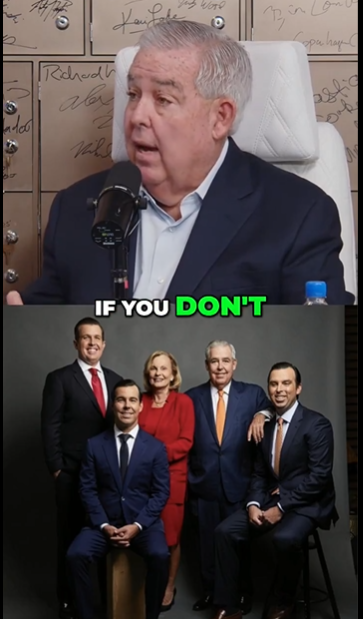

A short video circulating on X captured a blunt message from John Morgan, founder of Morgan and Morgan, that has sparked a flurry of blunt replies and raw personal testimony online. The clip, reposted by @UGOOOTWEETS, shows the conversation and the line that shifted the mood in comment threads: “If you don’t have a prenup, you don’t take under the will. – John Morgan tells Patrick Bet David about his ruthless approach to wealth. A must watch!!”
That one sentence is a good example of how a single public remark can surface both practical questions and deep emotional reactions. Below, I bring five real posts from X into a wider conversation that pairs what people said, the feelings behind it, and how experts and research interpret the stakes for families, blended households and older adults.
Voices from X and what people are really feeling
“If you don’t have a prenup, you don’t take under the will. – John Morgan tells Patrick Bet David about his ruthless approach to wealth. A must watch!!” — @UGOOOTWEETS, X.
That post is a broadcast of an aggressive financial plan. For someone with significant assets, the message can feel like clear family management. For others, it reads as a threat: a warning that intimate relationships will be governed by formal contracts. That mix of pride and dread shows why conversations about prenups rarely stay only about law.
“The wisdom and foresight of the rich is unmatched tbh. You hear some things and then you figure out why this person has been successful” — @BigChiefMannie, X.
This reply expresses admiration and shorthand acceptance of a pragmatic, shield-the-family approach. It is empathy for competence and an instinct to imitate the tools of people who have preserved wealth. Social researchers say imitation of high-status strategies is common when economic uncertainty rises, and lawyers who work with wealthy clients confirm that asset-protection is a routine motive for prenups. According to The Harris Poll, a minority of married or engaged adults had signed prenups, but openness to prenups has risen in recent years.
“Don’t get married if you think you may get divorced, which is what a pre-nup is. I wouldn’t marry someone who thought his money was more important than I am. I’m talking about first marriages. Anyone remarrying and who has children should definitely get Pre-nup to protect his or her children.” — @hiThere18823351, X.
This comment captures two emotions at once: hurt and boundary setting. It interprets a prenup as a lack of faith in the relationship when used by younger couples, but as a protective, responsible tool where children are already involved. Family law practitioners commonly see that split: prenups can feel insulting in first marriages, but they are widely recommended in second marriages to protect children’s inheritance rights. That tension is both personal and practical.
“I can’t tell you how many times I’ve seen, the father gets remarried and then when he starts having issues the new wife does a power of attorney and then switches the will. The new wife and her previous marriage kids get the inheritance screwing over the rest of the actual family.” — @OfSons90168, X.
This is a raw report of suspicion and fear that financial control can be used to re-route family wealth. Stories like this are familiar to estate lawyers and to courts that see disputes from blended families. Legal safeguards exist, but the human pain is real: when family trust breaks down, the result is often lasting grief and litigation. Research and reporting by The Guardian demonstrate that challenges to wills and allegations of undue influence or misuse of power of attorney have been rising in jurisdictions with growing numbers of second marriages and large estates.
“The only safe way for a Christian man to set the standards of his marriage these days is a prenuptial… The modern justice system rapes men. If she chooses divorce (like 70% of the time it’s the woman) she walks away empty handed… Men, wise up. Westernized Women, do better…” — @Grumpypie85, X.
This comment is angry, gendered and absolutist. It shows a man feeling vulnerable and hostile toward legal and social systems. Experts caution that framing family law as gender warfare inflames division and often misreads how courts actually work. The use of inflammatory language signals a fear of loss and a broader cultural anxiety about changing gender roles in marriage and money.
“Prenups make sense once you consider this one thing: If worse comes to worse and you and your spouse divorce, would you rather decide on the terms of that divorce with your spouse? Or would you rather have the State decide for you? (personal opinion, not legal advice)” — @samtayyari, X.
This is a practical reframing that many attorneys give their clients. It points to control and predictability rather than distrust. That argument is central to how many neutral family law professionals describe prenups: instruments that allow parties to set terms in advance rather than leave complex decisions to courts and default law.
What experts and evidence say about the risks and the realities
Prenups are rising in public acceptance and use, though they are still not universal. The Harris Poll in 2022 found that roughly 15 per cent of engaged or married Americans reported having signed a prenuptial agreement, up from single digits in 2010. That increase reflects shifting attitudes among younger adults and among people with business interests or prior marriages.
At the same time, disputes over wills and inheritance are increasing in some jurisdictions as large estates pass between generations and as blended families grow more common. Specialist solicitors in England and Wales estimated a steep rise in disputes, and journalists documented families suffering long, costly challenges when wills are contested and when capacity or undue influence is alleged.
Lawyers and bar associations stress that prenups must be drafted and executed with care to be enforceable. The American Bar Association notes that the enforceability of premarital agreements depends on factors such as full financial disclosure and the absence of coercion, and that a thoughtful legal process for both parties reduces later challenges.
Cases of power of attorney misuse and financial exploitation show how quickly relationships can change into legal problems for older adults and families. The U.S. Department of Justice’s Elder Justice Initiative and related enforcement work underline that fiduciary roles carry heavy duties and that abuse of those roles can produce criminal or civil liability.
Separate research into elder financial exploitation puts the scale of the problem into context. AARP estimated that older Americans lose billions annually to fraud and exploitation by people they know, and the organisation has called for coordinated public policy responses and better reporting systems.
Taken together, the evidence and expert guidance present a clear pattern: legal instruments such as prenups, wills and trusts can reduce uncertainty, but only when they are used with professional advice, transparent disclosure and regular review. When those safeguards are missing, the legal system can become a battleground that amplifies grief and division.
The human cost: people and families
The raw X comments map onto real stories reported in mainstream outlets and in court dockets. Families in England and Wales have reported ruinously expensive challenges when a will’s language was inconsistent or when later marriages prompted claims from new spouses and from children left out. One woman described two years of litigation and more than four hundred thousand pounds in costs to resolve a split over assets that had once been family property.
Estate planners and probate litigators say these cases are emotionally brutal. Clients talk about betrayal, broken relationships and a permanent loss of trust. Practitioners recommend plain language in wills, routine updating after life events, and the use of trusts or account beneficiary designations to reduce the risk that probate will become a battlefield. The same professionals also point to a different, often invisible harm: older adults who are financially exploited by those trusted to help them may never report abuse because of shame or fear.
Experts on family law also highlight that prenups are not a singular weapon. According to The New Yorker, Laura Wasser, managing partner at Wasser, Cooperman and Mandles and a widely known family law practitioner, has long advised that prenups can be a tool for clarity and communication, and that the conversation around a prenup can be as valuable as the document. Practitioners such as James Sexton, founder of TrustedPrenup and an experienced family lawyer, likewise encourage careful drafting and independent counsel for both parties so agreements are fair and durable. These are practical, professional voices that sit directly against narratives that portray prenups only as cold or cruel.
Conclusion: realistic, evidence-based steps families can take
If you are worried by the ideas in the X thread or by family stories you have heard, the most useful approach is practical and forward-looking. First, if you are planning marriage and you have assets, children from prior relationships, or a business interest, consider a prenup as a planning conversation, not a prediction of failure. Use separate counsel, full financial disclosure, and a reasonable timeline to sign.
Second, if your concern is protecting children and preserving family harmony after death, talk to an estate planning attorney about trusts, beneficiary designations and regular updates to wills. Plain, carefully executed documents lower the chance that a later spouse or an opportunistic actor can reroute an inheritance without challenge. Many courts that see contested wills focus on capacity and undue influence, so objective proof and professional witnesses at critical moments help deter disputes.
Third, safeguard older relatives and vulnerable adults by limiting unchecked powers. Avoid giving indefinite or unconstrained authority to a single agent. Use trusted financial institutions, independent oversight, and periodic accounting for agents who act under powers of attorney. If you suspect misuse, contact adult protective services, a probate attorney, and law enforcement.
Finally, remember the emotional work. The X thread shows that people bring pride, fear, anger and grief into conversations about money and intimacy. The best legal planning couples practical protections with compassionate communication. Putting agreements in place need not be a vote of no confidence. Done thoughtfully, legal planning can be an act of care that protects relationships, not just assets.
Learn More: X Users React to Trump’s Media Dominance and Political Stamina