
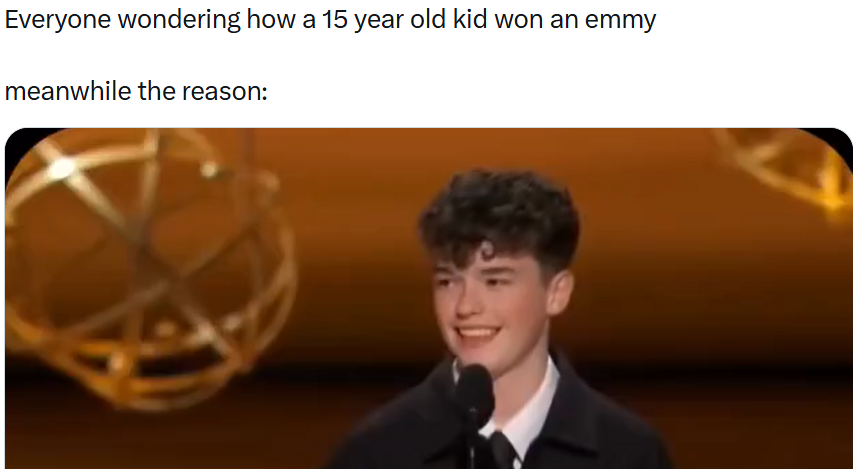

A short post on X asked a simple question: why did a 15-year-old win an Emmy? The clip the poster pointed to and the thread that followed came after a record-breaking year for a Netflix limited series that used hour-long, single-take episodes and put a raw, frightened teenager at the centre of a national conversation. That teenager, Owen Cooper, went from drama class to global spotlight, and his rise has split viewers between awe and unease. According to the Los Angeles Times, the win made Cooper the youngest actor to take home a major Emmy in his category.
The show at the heart of the debate uses unbroken camera takes to keep us inside scenes with no cuts. Directors and critics say that choice creates an intense, real-time feeling that makes audiences behave less like detached viewers and more like witnesses in the room. Vanity Fair and other outlets have documented how the series was rehearsed like a theatre and filmed long, continuous scenes to heighten immersion. That formal choice is part of why reactions on social media feel so personal.
What people actually wrote online and what it reveals
“His acting was simply outstanding.. The show however was boring. It’s artistic – yes! Entertaining – NO!”
X user @vikkibonky.
This comment shows a divide that many people feel between artistic craft and viewer pleasure. The poster is giving credit where it is due to skill, while also saying the story failed to hold them. That split is common when a piece of work asks for emotional labour from its audience. Film scholars who study long take techniques say viewers often trade conventional plot momentum for deeper character focus, and some people leave the trade feeling shortchanged. The Netflix and press coverage around the show describe exactly that choice: intimacy over conventional entertainment.
“Did you know that this was his first acting experience. Stunning!!”
X user @5abeerkllo.
This short line contains wonder and a kind of collective pride. For many viewers, the human angle of a novice delivering a breakthrough performance is striking. Casting and production teams have described finding Cooper in local drama classes and bringing him into a highly controlled rehearsal process. The fact that this was his first professional role is not just trivia; it explains why so many people feel protective of him and surprised by the result. The Netflix Tudum feature about the casting and rehearsal process gives the background to this reaction.
“This show, the one take approach, concept, writing and acting – top notch!”
X user @karnik1234.
Praise like this ties the technique to its effect. For viewers who felt carried along, the one-take style did what it intended. Research on long takes and single-shot filmmaking finds that continuous shots can increase immersion and the sense of continuity with character experience. Filmmakers intentionally choose the method to create a feeling of being present with on-screen people, and many reviewers have said it delivers that full immersion.
“I might be the only one who thinks the show is overrated … on every level. I feel like a lot of people have been influenced by the hype and aren’t really saying what they truly think. Relax.”
X user @the_RoOsTeR___.
Scepticism like this points to social dynamics online. When a show becomes a cultural event, praise can snowball and make quieter dissent feel drowned out. Social scientists who study online discourse note that bandwagon effects shape how people post, which can make honest disagreement appear controversial even when it is reasonable. That tension between hype and honest judgment is part of why conversations about awards are never just about craft.
“the women in the scene I really think she was afraid but also guys he 15 lets be honest most kids act that way when they are yelling at adults whether it be parents or teachers etc. It was more that he won and partly because of how people empathize with him and her when he was in that particular screen and u really felt like u were really watching a detective trying to solve a case and showing step by step how it happens in real life”
X user @WolfsterJ30419.
This long comment mixes observations about performance, adolescence, and audience empathy. It recognises that some reactions are about identification not only with the young actor but with other characters and the procedural world the show constructs. Clinical and media experts say that intense, realistic portrayals of youth distress can trigger strong empathic responses in viewers, and that those responses often shape how people judge performances and awards. Studies on immersive media and empathy find that the more a narrative feels like “being there,” the more viewers report emotional engagement.
What experts and people who lived it tell us
Directors and cast have openly said the one-take method made every performance feel more exposed and immediate. Director Philip Barantini and co-creator Stephen Graham described long rehearsals and stage-like performance conditions necessary to pull off unbroken episodes. The production notes and interviews are explicit that this approach pushed every actor into real-time emotional places on camera.
Mental health professionals who have commented publicly on the show do two things. First, they explain the psychology being depicted. Dr Sheila Redfern, a consultant clinical child and adolescent psychologist, and other clinicians have spoken about how insecurity and low self-worth can sit behind angry behaviour in young people. Second, experts warn that realistic depictions can affect both young viewers and the young performers themselves, so careful on-set support matters. The American Academy of Paediatrics notes that the media is a powerful influence on children and recommends active parental discussion and age-appropriate guidance when young people watch intense material.
People directly involved add perspective on what the experience felt like. Teachers and leaders at the Drama Mob, where Cooper trained, remember a hardworking pupil, and casting director Shaheen Baig described a careful audition and rehearsal route that brought a teenager into a demanding environment with professional safeguards in place. Those real-world accounts help explain both the performance and the concern.
Conclusion and practical advice
This moment matters because it mixes craft, surprise and social feeling. A young actor can astonish and unsettle viewers at once. For viewers who feel overwhelmed, remember that style choices such as single take shooting are a deliberate tool to raise emotional temperature. According to research on immersive media, those choices increase emotional engagement, which can feel intense even if the viewer is not moved by traditional plot beats.
If you are a parent or caregiver, watch with your child and talk about what you both saw. The American Academy of Paediatrics recommends discussing difficult themes rather than avoiding them, and making sure young viewers have context and emotional support. If you work in film or theatre with minors, follow established child welfare rules and on-set guidance so the work has professional support and clear boundaries.
If you are a viewer who loved the performance but felt uncomfortable with the subject matter, that is a valid and common response. Talk about it with others, seek out interviews with creators and clinicians to understand intent and effect, and if a show provokes distress, permit yourself to step away. For critics and awards voters, the lesson is simple and practical: assess craft and context separately, and remember that a single brilliant performance can exist inside a show people experience very differently.
The X thread that started this conversation illustrates how social media condenses admiration, doubt, and care into brief lines. Reading those lines closely and pairing them with expert and real-world reporting helps us move past hot takes toward a clearer understanding of why a 15-year-old performance could feel historic, unsettling and meaningful all at once.